
The network marketing industry in India has evolved into a more regulated, tech-driven, and opportunity-rich sector over the past decade. It now uses digital platforms, automation tools, and social media to become more scalable and accessible.
With a growing distributor base and rising consumer reach, India is emerging as one of the fastest-growing direct selling markets global
This growth is driven by rising demand for flexible income opportunities, entrepreneurial ambition, and the adoption of advanced MLM software that streamlines operations and improves efficiency.
MLM business began in the USA with the establishment of Avon.
Direct sales volume grew significantly, reaching around 300 to 500 million USD.
Many companies emerged based on the multi-level marketing (network marketing) model.
The industry expanded into new product categories like wellness, household, and food products.
Major MLM companies such as Avon, Amway, and Tupperware expanded globally, including entry into India, Korea, and China.
This marked the entry and global rise of MLM, setting the foundation for network marketing growth in India.
The network marketing industry in India has grown steadily over the past decade and is now valued at billions of rupees.
The market is estimated to have crossed INR 150 billion in earlier years and is projected to reach approximately INR 645 billion by 2025-2026.
This growth is driven by:
The industry continues to generate recurring income opportunities for millions of distributors across India.
The growth rate of the network marketing industry in India is influenced by digital transformation, changing employment trends, and increasing entrepreneurial activity.
Key growth drivers include:
Expansion into tier-2 and tier-3 cities
Rising use of mobile and social media platforms
Increasing demand for side income opportunities
Adoption of automated MLM systems and CRM tools
The industry is expected to maintain a strong compound annual growth rate (CAGR) due to its adaptability and low entry barriers.
Network marketing is legal in India when it follows government regulations and operates as a genuine product-based direct selling business. The Consumer Protection (Direct Selling) Rules, 2021 clearly define the legal framework for MLM businesses.
The legality of MLM in India is ensured when a company follows proper compliance standards. A legal network marketing company must ensure:
These rules help eliminate fraudulent schemes, strengthen trust in the industry, and support the steady growth of network marketing in India.
The future of the network marketing industry in India is expected to be highly technology-driven, transparent, and regulation-focused. With rapid digital transformation and increasing entrepreneurial interest, the industry is evolving into a more structured and scalable business ecosystem.
Artificial Intelligence (AI) and automation will simplify core MLM processes such as lead management, commission calculations, distributor tracking, and performance analytics, making operations faster and more accurate.
With rising smartphone usage, network marketing platforms are becoming mobile-first. This allows distributors to manage their business, training, and sales activities directly from mobile applications, improving accessibility and engagement.
Network marketing will continue to empower individuals to become micro-entrepreneurs with low investment, enabling income generation opportunities for students, homemakers, and part-time professionals.
The industry is expected to see increased participation from women, driven by flexible working models, home-based business opportunities, and digital accessibility.
Government regulations will continue to strengthen, ensuring transparency, reducing fraudulent practices, and building greater trust in legitimate MLM businesses.
The industry is steadily moving toward a more transparent, scalable, and digitally integrated business model, positioning network marketing as a key contributor to India’s entrepreneurial economy.
The growth of the network marketing industry in India is strongly supported by well-established direct selling companies that have built trust, strong product lines, and extensive distributor networks across the country.
Top companies include:
Amway India – One of the largest global MLM companies, offering health, wellness, and home care products with a strong distributor ecosystem.
Herbalife Nutrition – Focused on nutrition, weight management, and wellness products with a wide global presence.
Avon – A pioneer in direct selling, especially known for beauty and personal care products.
Vestige – A fast-growing Indian MLM company offering wellness, personal care, and household products.
Tupperware – Popular for its kitchen and household storage solutions through a direct selling model.
Modicare – One of India’s early direct selling companies with a diverse range of lifestyle and wellness products.
Oriflame – A global beauty brand offering skincare, cosmetics, and wellness products through MLM.
DXN – Known for its ganoderma-based health and wellness products with a strong international network.
Mi Lifestyle Marketing – An Indian company focusing on affordable wellness and daily-use products.
Forever Living Products – Specializes in aloe vera-based health, beauty, and personal care products.
These companies contribute significantly to the growth of the network marketing industry in India through structured compensation plans, quality-driven products, and large, active distributor networks.
The network marketing industry in India is rapidly evolving due to technology, digital adoption, and changing consumer behavior. These trends are reshaping how businesses operate and how distributors engage with customers.
AI is playing a major role in improving decision-making within network marketing. Companies use AI tools to analyze customer behavior, predict high-quality leads, and optimize conversion strategies, helping distributors focus on the most promising prospects.
The industry is shifting toward mobile-first ecosystems where distributors can manage their entire business through apps. This includes tracking sales, managing teams, and accessing training, making operations more flexible and efficient.
Social media platforms have become powerful sales channels. Distributors use Instagram, WhatsApp, and Facebook to build relationships, promote products, and generate leads in a more direct and personal way.
Automation tools are streamlining commission calculations, payout systems, and distributor tracking. This reduces manual errors, improves transparency, and ensures faster financial operations.
Blockchain is being explored to enhance trust and traceability in transactions. It helps maintain secure records of sales, commissions, and distributor activity, improving overall transparency.
Despite strong growth, the industry faces several challenges that affect credibility and long-term sustainability.
Fraudulent schemes misuse the MLM model, which damages trust in genuine companies and creates negative perceptions among the public.
Many newcomers enter without proper understanding of how the business works, leading to unrealistic expectations and early dropout.
Some MLM companies require higher startup investments, which can limit participation for beginners and small entrepreneurs.
Maintaining long-term engagement is difficult, as many distributors lose motivation without proper training, guidance, and support systems.
Companies must continuously update systems and processes to comply with changing government regulations and industry guidelines.
The network marketing industry has developed through multiple global stages before becoming established in India.
Technology has become the backbone of modern network marketing, improving efficiency, accuracy, and scalability.
These systems ensure accurate and real-time commission payouts, reducing manual errors and improving transparency.
CRM tools help manage leads, track performance, and improve communication across distributor networks.
Mobile apps allow distributors to run their business anytime, anywhere, increasing flexibility and productivity.
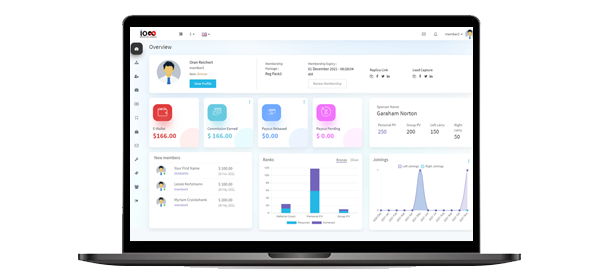
Dashboards provide instant insights into sales performance, growth trends, and distributor activity for better decision-making.
Integration with e-commerce systems enables smooth ordering, payment processing, and product distribution.
India offers strong growth opportunities for network marketing due to its population structure, digital adoption, and economic trends.
India’s young population is increasingly open to entrepreneurship and flexible income opportunities.
Widespread internet and smartphone usage is expanding the reach of network marketing businesses.
Students, homemakers, and professionals are actively exploring part-time and alternative income sources.
Rising income levels and purchasing power are increasing demand for wellness, lifestyle, and personal care products.
From the above statistics, details, it is evident that the MLM industry has excellent potential to develop more success in the future of Network Marketing in India. It has impacted the social as well as economic parameters in India. It is estimated that it will reach around 159.3 billion by the end of 2021 and INR645 billion by 2025. Easily we can conclude that growth of network marketing in India is very promising.
Choose the Best MLM software to enhance your MLM business and stay profitable to promote network marketing entrepreneurship.