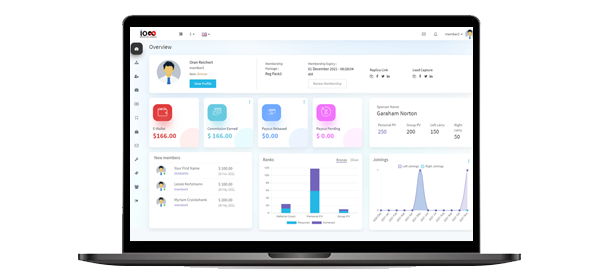

MLM software is essential for running structured and scalable network marketing operations. As distributor networks grow, manual management of commissions, sales tracking, and customer engagement becomes inefficient and unsustainable.
It serves as a central system that automates key processes, improves transparency, reduces errors, and ensures accurate commission handling with better communication across the network.
In this guide, we explore the key MLM software features and how to implement them effectively for long-term business growth.
MLM software plays a critical role in managing complex distributor networks and ensuring smooth daily operations.
It helps businesses automate key functions such as commission distribution, lead tracking, and sales monitoring. It also improves transparency by reducing manual intervention and human error.
With increasing competition in the MLM industry, software-driven automation is no longer optional, it is essential for survival and growth.
Modern MLM software comes with a wide range of features designed to simplify operations, improve efficiency, and support business growth. Below are the most essential features explained in detail:
Auto Payout
Auto Payout ensures all financial transactions are handled securely, efficiently, and without delays through an automated payout system. It removes the need for manual intervention by directly triggering payouts based on predefined MLM commission and bonus rules.
It integrates with payment gateways such as credit cards, PayPal, and digital wallets to automate:
This auto payout system ensures distributors receive earnings on time, reduces manual workload, minimizes errors, and builds trust across the network through fast, accurate, and transparent financial processing.
E-Commerce Integration
E-commerce integration transforms MLM software into a complete online business platform.
It allows companies to:
Integration with platforms like OpenCart and Magento helps businesses simplify product management and customer purchasing experiences.
MLM Plan Support
MLM businesses operate using different compensation structures, and software must support them effectively.
Common MLM plans include:
A flexible system allows businesses to adapt their compensation strategy based on market needs.
Support Ticket System
A built-in support system ensures smooth communication between users and administrators.
It helps:
Advanced systems also include automation, canned responses, and knowledge base support to reduce workload.
E-Pin Management
E-Pins provide a secure method for registration and transactions within MLM systems.
They are commonly used for:
This ensures controlled access and prevents unauthorized registrations.
E-Wallet System
An E-Wallet acts as a virtual account within the MLM platform.
It enables users to:
This improves transaction speed and enhances user convenience.
Website Replication
Website replication allows each distributor to have a personalized version of the company website.
It helps distributors:
This feature strengthens the overall network marketing structure.
CMS-Based Website Management
A Content Management System (CMS) allows easy updates without technical expertise.
It helps administrators:
This ensures the website remains updated and SEO-friendly.
Multilingual & Multicurrency Support
Multilingual support enables MLM platforms to operate globally by offering multiple language options along with multi-currency functionality, making the system adaptable for users from different regions and financial systems.
It improves:
This is essential for global MLM expansion to ensure smooth communication and financial handling worldwide.
Backup and Security System
Data protection is a critical part of MLM operations as it involves handling sensitive business and financial information, where issues like data security issues and data migration must be carefully managed to avoid loss or breaches. A strong backup system ensures data safety and quick recovery during unexpected system failures.
A strong backup system ensures:
Security measures like encryption and authentication add additional protection layers.
Communication Features
Communication tools help improve collaboration and coordination across the MLM network by enabling faster and more effective interaction between all stakeholders. They ensure that updates, support, and information flow smoothly throughout the system.
They include:
These features ensure smooth interaction between distributors and management, improving engagement and reducing communication gaps within the network.
Sales and Inventory Management
Sales and inventory tools help businesses manage product flow efficiently by maintaining real-time control over stock levels and order processing. They ensure that products are always available and properly tracked across the system.
They support:
This ensures smooth operations, reduces stock-related issues, and improves overall customer satisfaction through timely product availability and accurate order fulfillment.
Analytics and Reporting
Analytics tools help businesses make data-driven decisions by providing clear visibility into performance metrics and operational trends. They convert raw data into actionable insights for better planning and strategy.
They provide insights into:
Advanced reporting helps businesses optimize strategies, improve performance, and identify areas for scalable growth across the MLM network.
Beyond core functionalities, advanced MLM software should also include additional features that enhance performance and usability.
A high-performing system ensures smooth operations even under heavy usage. Strong security protects sensitive business and financial data.
Modern MLM platforms are built using technologies like:
This ensures scalability and long-term stability.
This feature allows assigning different roles such as:
It helps maintain control and structured access across the system.
MLM software should be implemented in a structured way to ensure smooth operations, accurate commission handling, and better network performance. Proper implementation helps businesses avoid errors, improve user adoption, and fully utilize automation features for scalable growth.
Before implementation, clearly define your MLM plan, target audience, and operational structure to ensure the software is configured in alignment with your business goals and compensation strategy.
Select MLM software that can handle increasing users, transactions, and data without performance issues, ensuring long-term business growth and stability.
Customization helps align the software with your specific compensation plan, workflows, and branding to ensure seamless business operations.
Proper training for administrators, distributors, and support teams ensures smooth adoption, better usage, and fewer operational errors.
Continuous monitoring of system performance and user activity helps identify gaps, improve efficiency, and optimize overall business outcomes over time.
MLM software is the foundation of any successful network marketing business. With features like automation, e-wallets, analytics, and communication systems, it simplifies complex operations and enhances scalability.
However, true success depends not only on choosing the right features but also on how effectively the software is implemented and optimized over time.
A well-structured MLM system leads to better transparency, improved efficiency, and long-term business growth.